
“With this Rover 75 Limousine, you are really spoiling us”
07 July 2026
This Rover - is the sort of car that Longbridge envisaged attending civil events or arriving at an ambassador’s reception (Ferrero Rocher optional). It is also one of the rarest variants of the 75.
Rover introduced the long wheelbase version of the flagship 'Connoisseur', as the ‘75 Vanden Plas’ at the 2002 Geneva Motor Show, with sales beginning in June. They shortly afterwards changed the badge to ‘75 LWB’, and its final incarnation was the ‘75 Limousine’. The company had envisaged a LWB 75 as early as 1997, a year before the standard saloon’s launch, but corporate politics delayed its introduction by five years.
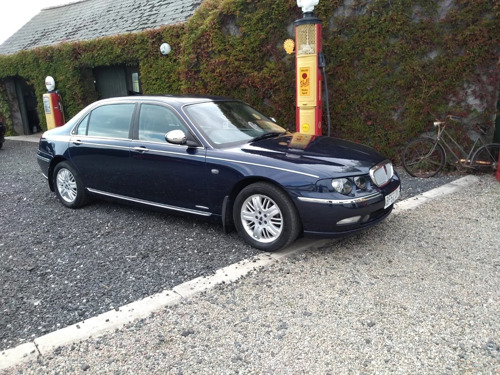
Rover sent the 75 bodies to S. MacNeillie & Son of Walsall, who extended the bodywork by eight inches; the coachbuilder cut the Rover’s body in half and inserted specially pressed longer rear doors and an extended roof. As befitting a motor car of quality, there were extra reading lights and a second clock for the passengers.
Power was from the standard 24-valve 2.5-litre V6 engine, with a choice of manual or automatic gearboxes.
The 75 Vanden Plas was sold through MG Rover dealerships and was available only in RHD form. The price was £27, 995; £4,425 more than the standard 75 Connoisseur. If you were feeling very extravagant, you could spend another £225 on a wooden-rimmed steering wheel and £450 to give the coachwork a pearlescent finish.
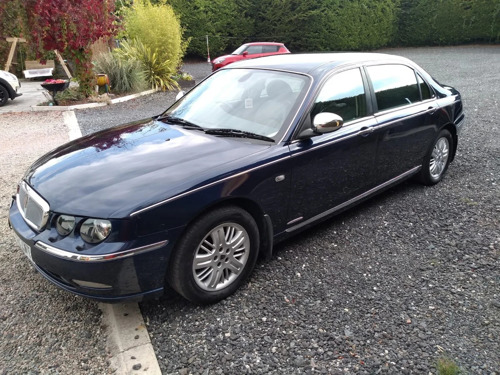
The owner of this Rover finds it beautifully quiet and smooth. He also notes that many people think it is a standard 75 – a testament to the coachbuilder’s art. This Royal Blue Limousine has a fascinating history, having been owned by MG Rover, who loaned it to HRH Prince Edward.
From a marketing perspective, the rationale behind the 75 Limousine was quite logical. It followed in a long tradition of coachbuilt stretched versions of large family saloons for government departments, local authorities, and funeral parlours. From the BL/BMC empire alone, there were the ‘Landcrab’ and ‘Wedge’ limousines, while some organisations favoured modified Ford Granadas or Vauxhall Carltons. The LWB 75 also addressed the issue of the standard model’s rear legroom, which was the subject of some complaints.
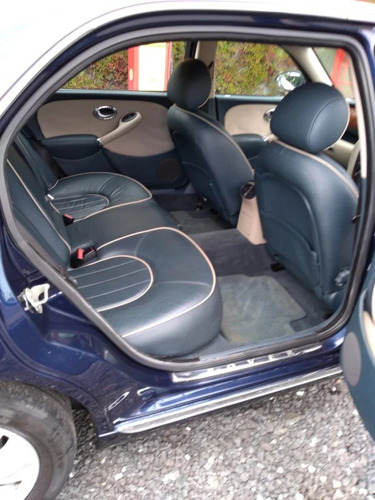
Autocar thought ‘this car comes with a wholly convincing air of luxury, comfort, and refinement”, which was precisely what the LWB 75’s intended market demanded. The Limousine, as much as the MG versions, demonstrated the scope of the 75, making its demise in 2005 all the more regrettable. The extensive following of the range today, and the attention they attract at shows, is a testament to the appeal of the last of the Rover family.
Which is all the more reason why the Rover 75 Limousine is a car that really should be prized in high society for its exquisite taste.
With thanks to the vendor for his time
With thanks to the vendor for the permission to use the images in this blog.