
To Modify or Not to Modify?
05 October 2026
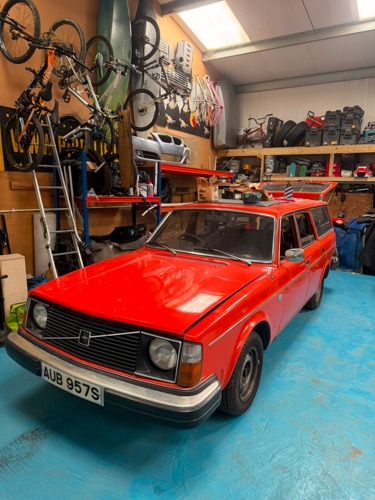
The year is 1995, and the place is Southampton. It was there that I recalled encountering a ten-year-old Vauxhall Nova Merit festooned with stripes and five aftermarket exhaust stubs. I doubt that it had a modified engine, as I seem to remember the proud owner having to change gear twice to travel approximately 100 yards.
31 years later, my next-door neighbour Ben is treating his 1992 Rover Metro to white wheels and other modifications that will give it an authentic 1990s Max Power look. He fully expects - and hopes for - a mixed reaction, ranging from appreciation from the younger crowd to grumbles from older Metro die-hards.
The modification of a classic car is a vast and inevitably subjective issue. My own 1960 Wolseley 6/99 now has seat belts, which some may contend “detracts from its authenticity”. My response is that I really do not wish to cannon into a fascia studded with Bakelite switches in an authentic early 1960s fashion.
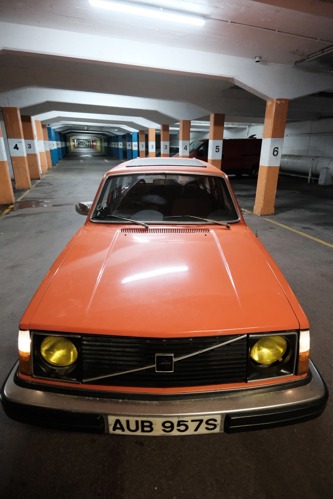
On the other hand, I have been advised by an expert against retrofitting power steering (it was not officially available until 1961) on the grounds that it would make the setup worse. Heavy is preferable to over light. My father has similarly decided against installing PAS in his Talbot-Matra Murena 1.6, even though he does find it not exactly the lightest of cars.
It could be argued that modifications to make a classic car safer in modern traffic - seat belts, rear fog lamps, hazard flashers - are in a different category to aesthetic changes. If I owned the 6/99’s predecessor, the Wolseley 6/90, I would augment the semaphore trafficators with flashing indicators, simply because a) they can be nearly invisible, and b) few motorists will recognise them.
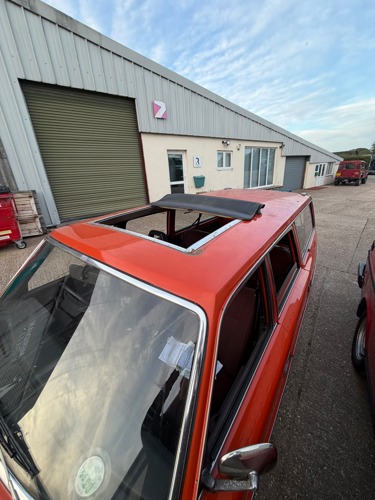
Here I must confess to a prejudice regarding aesthetic changes; I am not a great fan of Ro-Style wheels. Whisper it, but I have long thought that the Rover P5 3-Litre is better-looking than the P5B 3.5-Litre, while BMC Farinas on Ro-Styles conjure grim images of my past. There was a time near my home village when every ageing Gene Vincent look-alike favoured a decaying Morris Oxford Series VI with Ro-Style wheels and a tinted sun band. American Graffiti it was not.
But such changes were entirely the province of the Morris owner, while Ben’s modifications are in keeping with his Metro’s era. Perhaps one of the main fascinations of its new look is how younger generations respond to, and embrace, the popular culture of the past: music, fashions, and cars.
After all, this writer did buy his first washboard in 1987 when he was at Sixth Form College - thirty years after the “Skiffle Boom”.